A word that is doing too much work
Every alarm and camera vendor now sells "verified" alerts. For some it means a person in a control room looked at a picture. For others it means a camera's built-in analytics fired, or a motion sensor tripped twice in a row. When one word covers all of these, the control room loses the one thing it needs from it: a reliable sense of how much to trust the alert in front of it.
We think the industry is better served by a narrow, honest definition than by a broad, flattering one. This is ours.
Our definition
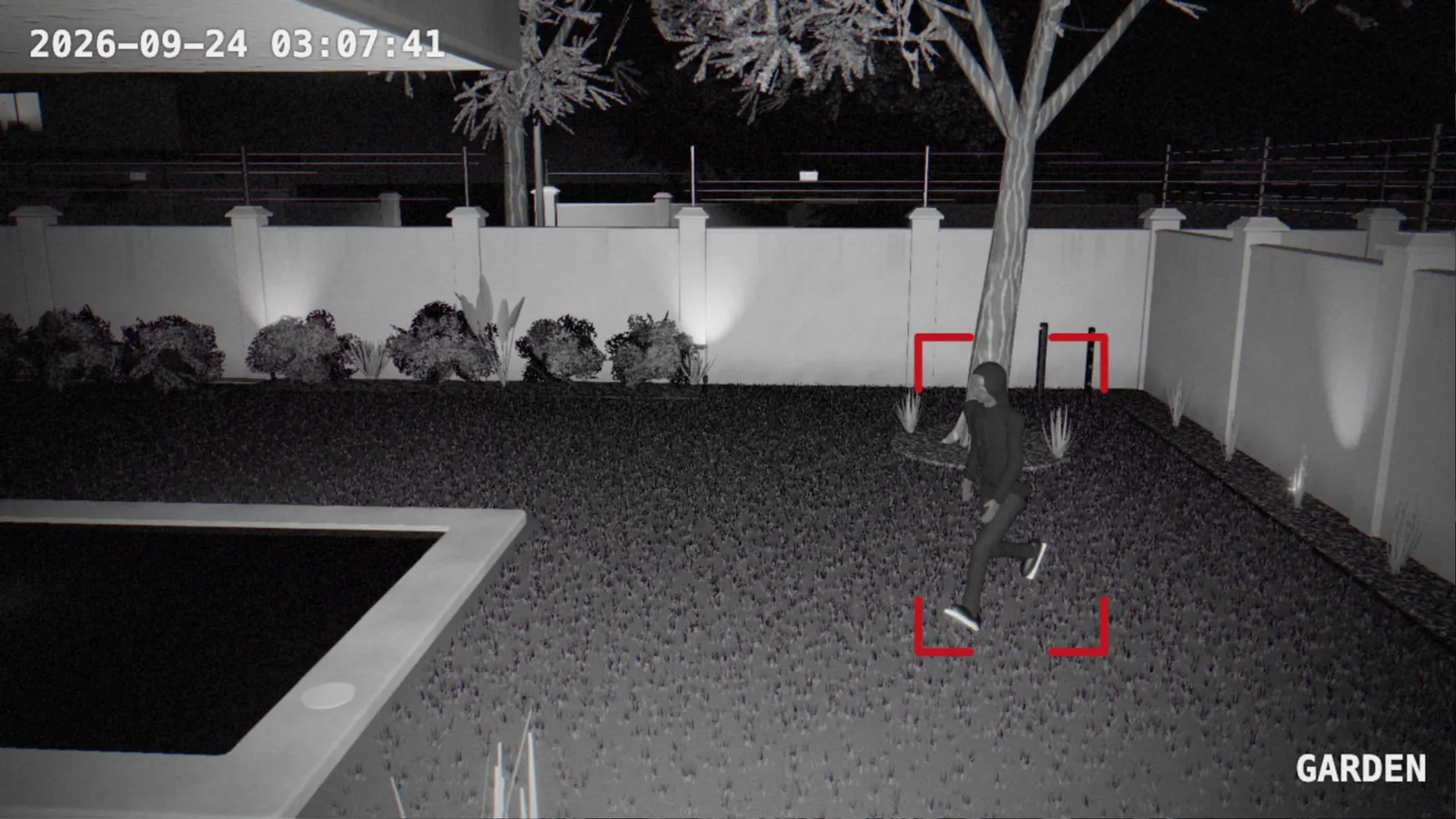
At CleverCam, a verified detection means one thing: the system is confident there is a real person or a real vehicle in the picture, on a camera that is armed, and it can show you the photo.
That is all it means. It does not mean a break-in. The person in the frame could be the owner who forgot to disarm, a guard on patrol, a gardener who arrived early or a resident walking the dog. Verification answers the question "is somebody there?". Only a human, with context, can answer "should they be?".
Saying this plainly matters, because the two questions call for different actions. The first is a job for software, and software is now very good at it. The second is a job for an operator, a keyholder list and a set of agreed procedures.
How a CleverCam detection is checked
A detection is normally checked twice, by two independent models, before it becomes an alarm.
- On the hub, on site. The CleverCam hub watches each camera's stream on the property and runs a detection model on the hub's own AI processor. It is looking for people and vehicles, not for changing pixels. When it finds a candidate it is not already sure about, it takes a closer look: a second, larger model re-examines a close-up crop of that part of the picture before the hub raises anything. Most of the everyday noise (swaying trees, rain, insects, shadows, animals) is discarded here, on site, in a fraction of a second.
- In the cloud, as a second opinion. The hub then sends the single event photo (not the video) to a heavier model running on our own GPU servers. If the cloud model disagrees, the event is downgraded instead of being raised as an alarm. If the cloud check does not answer within a few seconds, the hub's own verdict stands. A slow internet link should never be the reason a real alarm is lost.
Continuous video is analysed on the hub and stays there. What leaves the property for an event is a photo and the details of the detection. Live video only streams when someone opens it.
Grades, not percentages
The CleverAlert app shows two grades: High confidence and Medium confidence. You will not find a percentage anywhere in the app, and that is deliberate.
A number like "87%" looks precise, but a model's score depends on light, distance, angle, lens and weather. An 87 on a well-lit driveway camera does not mean the same as an 87 on a wide-angle camera looking down a dark boundary wall. Operators who are shown numbers start anchoring on them and inventing personal thresholds ("I only dispatch above 90"), and that makes a control room harder to train and impossible to audit.
Two grades, each tied to an agreed action, are easier to reason about:
| Grade | Box colour | Default action | Other choices |
|---|---|---|---|
| High confidence | Red | Alarm event, siren on | Triage |
| Medium confidence | Yellow | Alarm event, siren off | Triage or Skip |
Alarm event is a full alarm that every app user and the control room sees. Triage sends the detection to a queue that only control-room operators see: the customer is not alerted and the siren never sounds. Skip throws the detection away. A High confidence detection cannot be skipped. These choices are set per camera, and they only apply while that camera is armed.
What a control room should do with a verified alert
A verified alert tells an operator that the picture is worth looking at. It does not replace the rest of the procedure. The control rooms that get the most from visual verification tend to follow the same habits:
- Look at the picture before anything else. It is the fastest context available. Who, how many, where on the property, and what are they doing?
- Check the arming context. Was the site armed minutes ago or hours ago, and by whom? A person on the driveway thirty seconds after the owner armed is usually the owner.
- Phone while you look. A verified person on a site with the owner's car in the driveway is a keyholder call first. A verified person climbing a boundary wall at 02:00 is a dispatch.
- Dispatch on signs of intent. Climbing, carrying tools, faces covered, several people at the perimeter after hours, a vehicle stopped at a gate at an odd time. The photo usually tells you.
- Record the right outcome. "False detection" and "real person, authorised" are different outcomes. If they are lumped together as "false alarm", you lose the data that shows whether the problem is the technology or the customer's arming habits.
What verification does fix
Visual verification removes the noise that has made traditional alarms so expensive to run: wind, rain, insects, pets, shadows and headlights no longer reach the operator's screen. What is left is a smaller stream of alerts that each show a real person or vehicle. Operators can take every one of them seriously again, and that is the real prize. Fewer alerts matter less than alerts that are worth reading.
What verification does not remove is the need for judgement. Vendors who blur that line create customers who feel let down when a responder arrives and finds the gardener.
The honest version works better
When a customer is told that "verified means we saw a person", they are not disappointed when the person turns out to be family. When they are told that "verified means confirmed break-in", every friendly visitor becomes a broken promise.
We would rather under-promise on the word and over-deliver on the picture. If you run a control room and want to see how CleverCam events reach your operators, start with our page for alarm companies.