One device cannot do every job
Security professionals think in layers. Each layer answers a different question, and each one buys time:
- Perimeter: walls, electric fences, outdoor beams and outdoor cameras. Is someone coming onto the property?
- Shell: door and window contacts, glass-break sensors. Is someone getting into the building?
- Interior: passive infrared (PIR) detectors. Is someone inside?
- People: panic buttons and duress codes. Is someone in danger?
The earlier a layer detects an intruder, the more time there is to respond. That is why the perimeter matters so much, and also why it has always been the noisiest layer.
Why the perimeter is so hard
Outdoor beams and fence sensors answer only one question: did something cross the line? They cannot tell a burglar from a dog, a blown branch or a bird that landed on the beam. Many households learn to ignore the outdoor zones or switch them off entirely, and the most valuable layer of the system goes quiet.
Cameras answer the question beams cannot: what crossed the line. A camera watched by a people detector tells you whether it was a person or a vehicle, and it shows you the picture.
The best of both
In a well-designed system, beams and cameras cover the same ground and back each other up:
- The panel signals the alarm. When your alarm panel is connected through a supported communicator (CleverCam receives signals from IDS HYYP, Olarm, Onyyx and Ajax panels), its alarms appear in the CleverAlert app and at your control room, alongside the camera events.
- The cameras show what happened. A schedule in the CleverAlert app can use an Alarm trigger (for example Burglary, Panic or Any alarm) with the Take a photo tour action, so that a panel alarm takes a picture from every camera on the site, or from the groups you choose.
- The camera catches what the beam misses. A person who climbs over a beam, or approaches from a direction the beams do not cover, is detected by the camera on its own.
The result is an alarm that arrives with evidence. An operator who sees a burglary signal next to a photo of a person at the wall can act with confidence. An operator who sees the same signal next to a photo of an empty garden knows to call the owner first.
Arm cameras and panel together
A common weakness in mixed systems is that the cameras and the alarm panel are armed separately, so one layer is forgotten. In CleverAlert, the Away arm, Stay arm and Disarm tiles on the Home screen arm the whole site at once, and each group can be set to follow the site-wide arm or skip it.
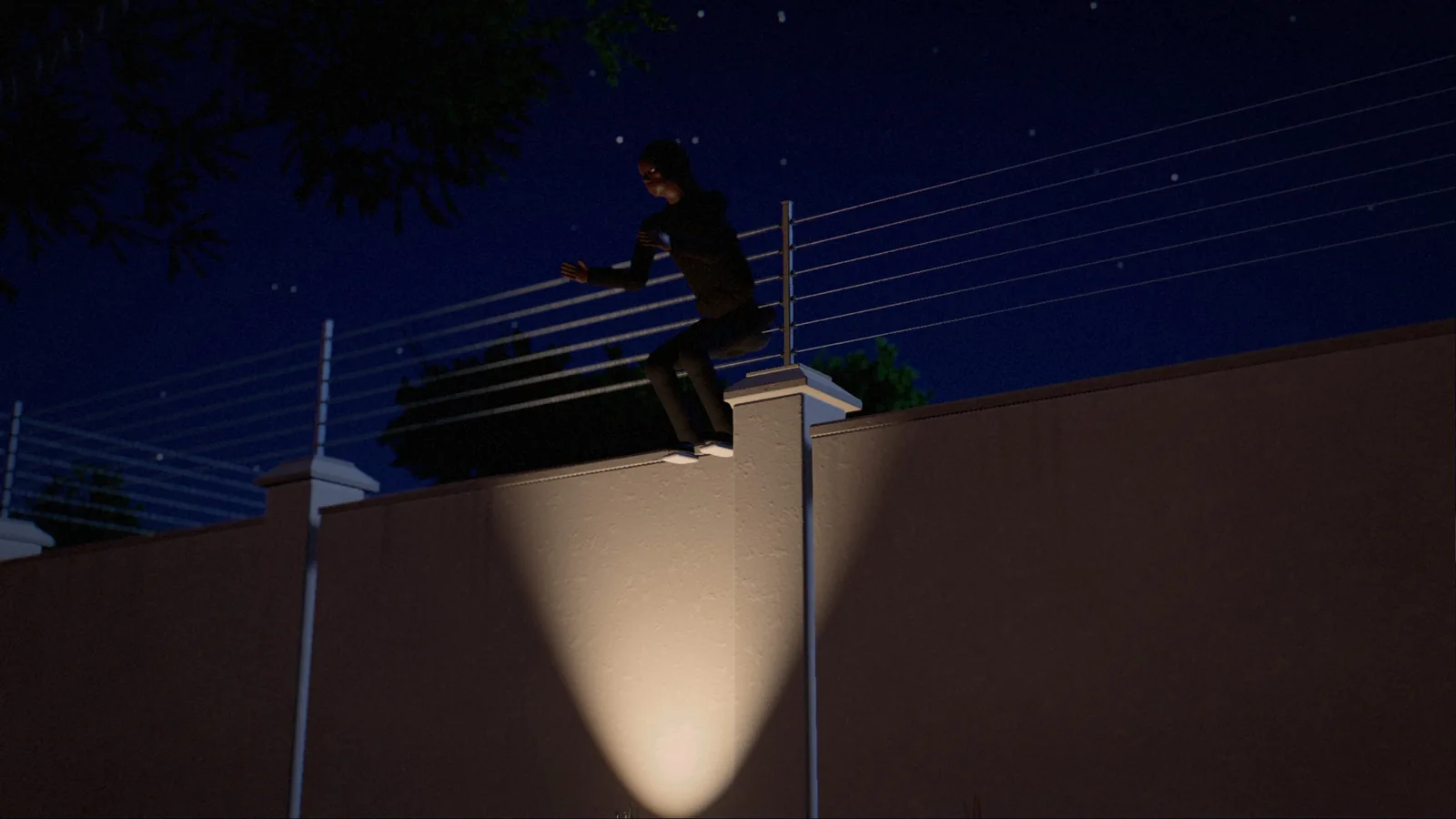
Stay arming is where cameras add the most value. At night, when the family is inside and the interior PIRs are off, the perimeter cameras can stay armed. Anyone who comes over the wall is detected while they are still outside.
Schedules take the human out of it. A schedule using Change arm status can arm the perimeter every night at the same time, and the app can remind you to arm if you forget.
Use the siren where it counts
Deterrence works best early. For perimeter cameras, a sensible pattern is:
- High confidence detections raise an Alarm event with Sound siren on, so an intruder at the wall hears it before they reach the house.
- Medium confidence detections raise an alarm without the siren, or go to your control room's Triage queue, so the siren is saved for the clear cases.
Daytime awareness without alarms
During the day you usually do not want alarms, but you may still want to know who is at the gate. Chime mode (the Activate chime mode switch, available while a group is disarmed) sends a gentle heads-up when a person is detected, limited to one phone alert every three minutes.
Put cameras where the beams complain
If you already have beams, your alarm history is a map of where cameras are needed. The zones with the most unexplained activations are exactly the places a camera will add the most certainty. Start there.
A layered system is not about more devices. It is about making sure that every layer's weakness is covered by another layer's strength, and that every alarm reaching a responder carries the evidence they need to act on it.